



1. Scope of the Standard
1.1 Technical Regulation
This specification defines the regulatory requirements for socket-weld reducing inserts, establishing standards for geometric parameters, tolerances, surface quality, marking methods, and the physicochemical characteristics of materials. This documentation is applicable to class 3000 and 6000 fittings, compatible with ASME B16.11 requirements. Metric (SI) parameters and standard US dimensions are provided in the corresponding technical tables.
1.1.1 Classification of Fittings and Pipes
The nomenclature of fittings covered by this practice is presented in Table 1. The classification is based on the nominal diameter (NPS/DN), pressure class, and the relationship with the pipe wall thickness specification.
| Class Designation | NPS | DN | Pipe (Base) | Wall Thickness |
|---|---|---|---|---|
| 3000 | ⅛–4 | 6–100 | Schedule 80 | XS |
| 6000 | ⅛–3 | 6–80 | Schedule 160 | – |
Note: The specified parameters do not restrict the use of thin-walled pipes in combination with inserts, provided that strength calculations are observed.
1.1.2 Products with Partial Compliance
EV Group China supplies fittings according to individual specifications. Products manufactured from non-standard steel grades or having specific geometric dimensions are agreed upon between EV Group China engineers and the customer. Such products undergo mandatory marking in accordance with the requirements for partial compliance fittings.
1.1.3 Welding Technological Aspects
Requirements for the welding process are determined by the project documentation of the piping system. EV Group China recommends adhering to the following technical conditions:
- Compliance with the installation regulations for socket-weld connections.
- Control of the gap between edges during forming and adherence to the minimum socket wall thickness (see Fig. 1).
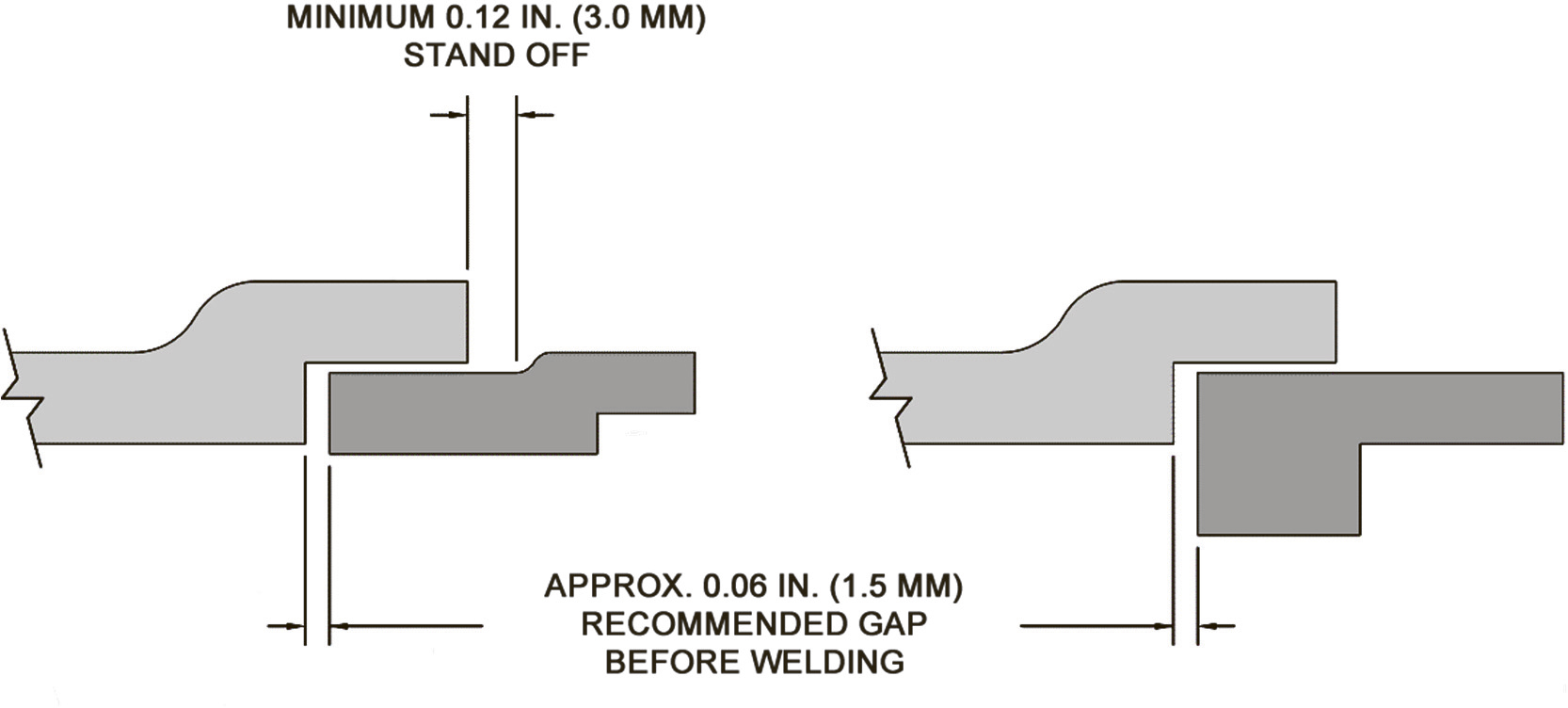
- Compliance with recommended technological gaps (see Fig. 2).
Figure 1. Design features of the socket
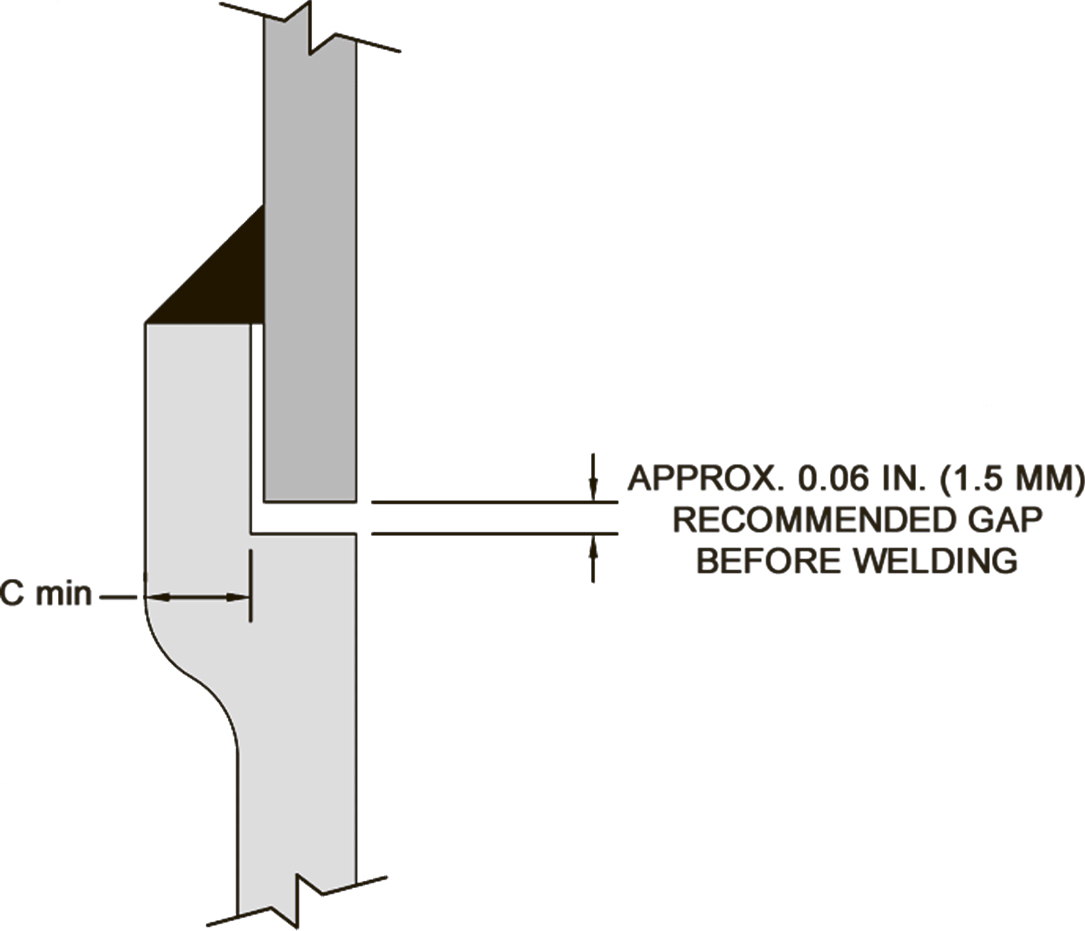
Figure 2. Recommendations for gaps
2. Industry Standards and Operation
2.1 Regulatory Framework
All EV Group China fittings are manufactured in strict accordance with the current editions of the standards specified in Appendix A. Compliance with these standards ensures full equipment compatibility in international piping systems.
2.2 Safety Regulations
When operating fittings as part of systems falling under the jurisdiction of ASME BPVC or ASME B31, it is necessary to consider the temperature and pressure limitations established by the relevant high-pressure pipeline safety codes.
2.3 Metrology and Standardization
The US and SI unit systems are independent standards. When designing assemblies, EV Group China recommends using one system to avoid inconsistencies in product parameter calculations.