



ASME/ANSI B16.5 Technical Standards: Overview and Scope
The ASME/ANSI B16.5 standard is a fundamental regulatory document in the global pipeline industry. It regulates the parameters of flanges and flanged fittings in the size range from NPS 1/2″ to NPS 24″. The document sets strict requirements for geometric dimensions, tolerances, weight characteristics, and pressure ratings (Class 150 – 2500 psi). For large-diameter flanges (NPS 26″–60″), the accompanying standard ASME/ANSI B16.47 is applied.
EV Group China provides high-quality flanged connections that fully comply with these international regulations, ensuring their compatibility with mating equipment in critical engineering systems.
The standard defines:
- Pressure classes: 150, 300, 400, 600, 900, 1500 (for the entire NPS 1/2″–24″ range) and 2500 (for NPS 1/2″–12″).
- Requirements for manufacturing materials, testing, and bolt hole marking methods.
- Rules for gasket installation and bolted connections.
Typology of Flanges According to ASME/ANSI B16.5 Classification
EV Group China’s assortment includes all types of flange products provided by the standard:
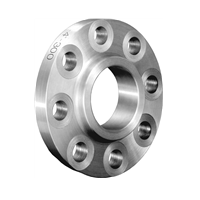
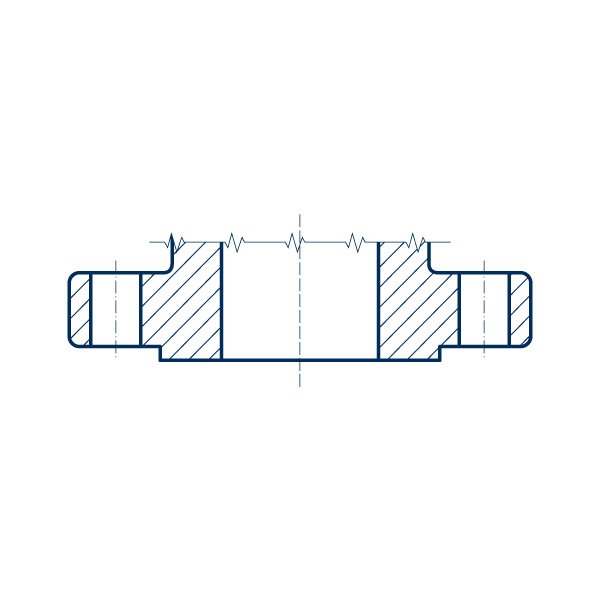
- Slip On (SO) Flange: Flat welding flanges. Optimal for low pressure (Class 150/300). Easy to install, they slide over the pipe and are secured with two fillet welds.
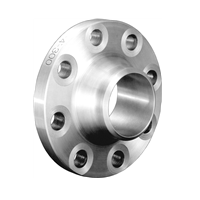
- Welding Neck (WN) Flange: Welding neck flanges. Feature a tapered transition (hub), providing high strength and resistance to cyclic loads. Recommended for high-temperature and high-pressure environments (Class 150–2500).
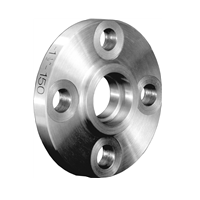
- Socket Weld (SW) Flange: Socket weld flanges. Used primarily for small-diameter pipelines (up to NPS 4). Installation is carried out by inserting the pipe into a special socket and subsequent welding.
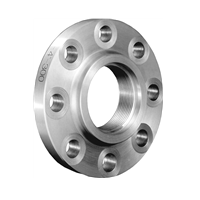
- Threaded (ST) Flange: Threaded flanges. Used in conditions where welding is prohibited due to fire safety requirements. Applied for small diameters (NPS 1/2″–3″).
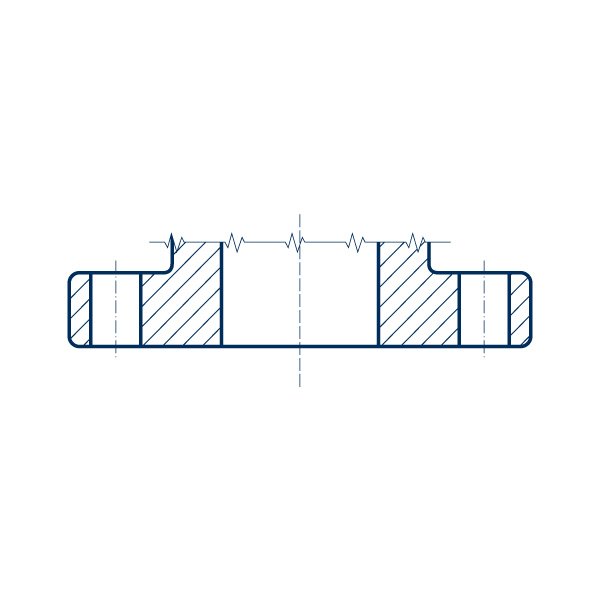
- Lap Joint (LJ) Flange: Lap joint flanges. Ideal for systems requiring frequent disassembly. They allow for easy alignment of bolt holes thanks to the rotating design.
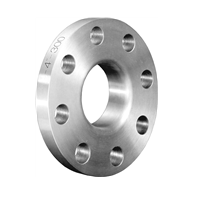
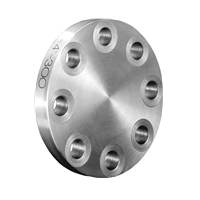
- Blind (BL) Flange: Blind flanges for sealing the end sections of pipelines.
Types of Sealing Surfaces
The choice of surface depends on sealing capacity and operating conditions:
| Type | Description |
|---|---|
| RF (Raised Face) | With a raised face (the most common type). |
| FF (Flat Face) | Flat surface for use with full-face gaskets. |
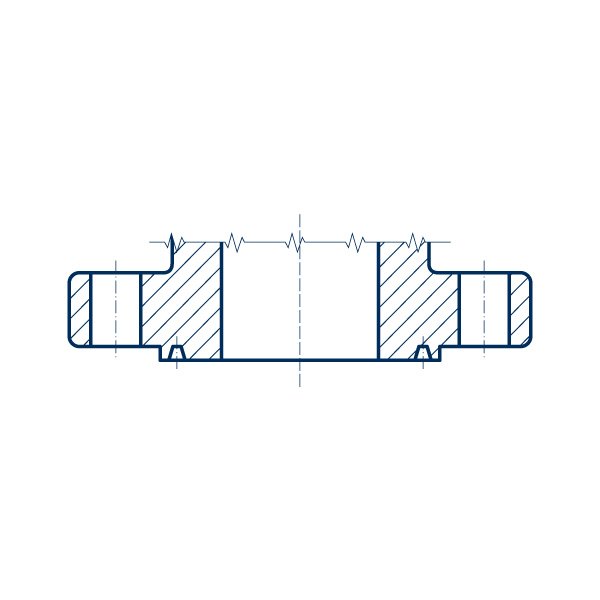
| RTJ (Ring Type Joint) | For oval ring gaskets, designed for high pressures. |
Materials and Specifications
EV Group China supplies flanges made of steel that complies with international ASTM standards:
- ASTM A105: Carbon steel for general piping.
- ASTM A182: Alloy and stainless grades for high temperatures.
- ASTM A350: Low-temperature steels with high impact toughness.
- ASTM B462/B564: Nickel and corrosion-resistant alloys.
Tolerances and Quality Control
All products undergo strict control of geometric parameters. Tolerances for bolt hole center-to-center distances and flange thickness are within ±1.0–3.0 mm, ensuring precision assembly at the customer’s site.